Demonstration video
Electric guitar
Rhythm and lead technique, tone and modern styles.

Students perform
From first repertoire to advanced performances: choose a video and hear the students’ work.
What students say
Experiences shared by people who have studied at Lugano Guitar School.
Method
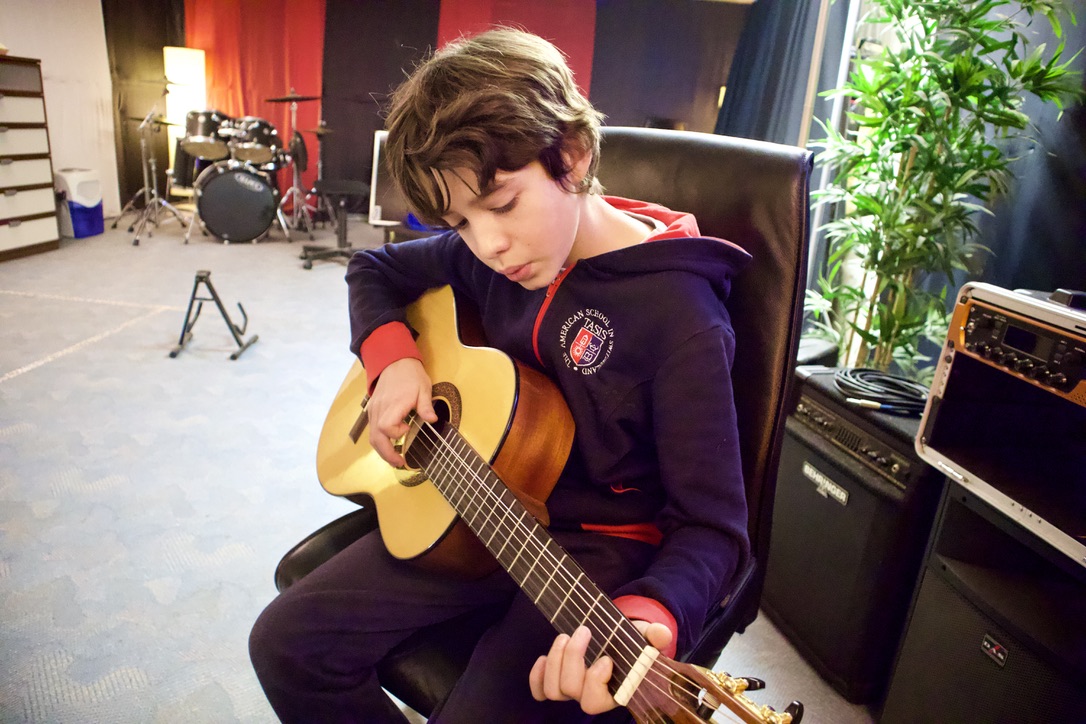
Your level, goals and repertoire determine the sequence and pace of the work.
Technique, rhythm, harmony and listening are applied to repertoire, improvisation and composition.
The work is organised around concrete goals, making progress clear and identifying the next step.
Courses
Choose the most suitable course; full programmes are available in the expandable sections below.
Lessons may include one or more of these subjects, depending on the chosen course and the student’s level.
Free guide: a practical introduction to open chords, rhythm, barre chords, notes and strings.
Download “First Chords” →The course is defined after an initial meeting, based on the exam or audition requirements and the available time.
Rhythm and lead technique, tone and modern styles.
Technique, repertoire and the instrument’s expressive range.
Groove, technique and the role of bass in the rhythm section.
The school
Lugano Guitar School offers one-to-one, paired and ensemble courses for students of different ages and levels.
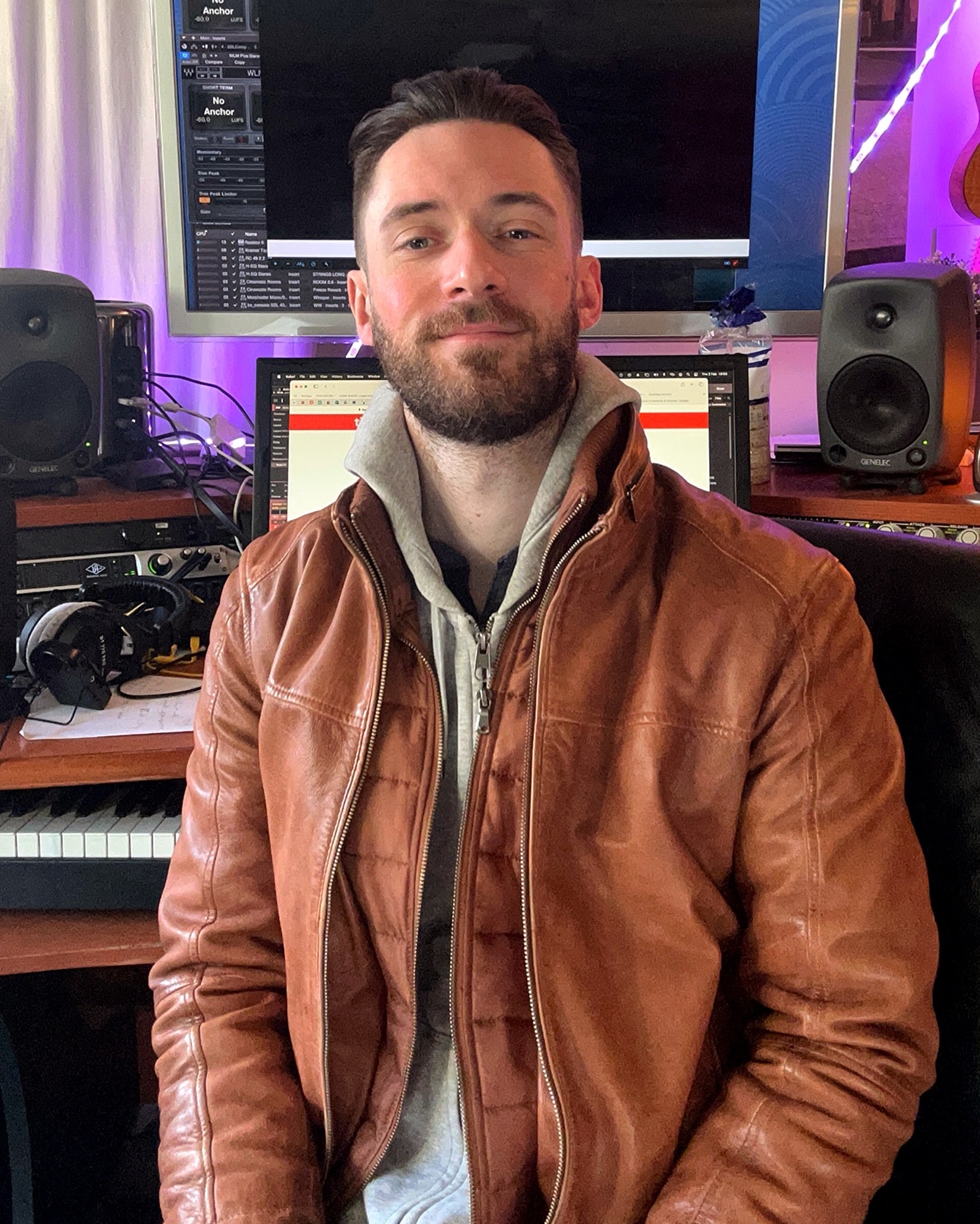
The school is founded and directed by Lorenzo Soldini. His training in Switzerland, New York and the United Kingdom brings together instrumental teaching, harmony, music production and composition.
Lorenzo Soldini began studying guitar at the age of twelve, initially exploring rock and jazz.
Alongside this, he studied classical guitar and music harmony at the Conservatorio della Svizzera Italiana, where he studied ear training and harmony with Ivo Antognini.
In 2010 he moved to New York and graduated from the Institute of Audio Research, specialising in composition, music production and mixing.
After returning to Switzerland, he taught guitar in several music schools, gaining experience with students of different ages and levels, before founding Lugano Guitar School in 2011.
In 2014 he contributed to the production of Take Me Back to 23, a finalist in the Swiss selection for the Eurovision Song Contest and the only entry from Ticino. Over the years he has collaborated as a guitarist and producer with artists including Iris Moné and Deborah Bough.
In 2021 he completed a Master’s degree in Professional Media Composition at the University of Chichester in the United Kingdom. He has since composed original music for numerous audiovisual projects, including the series Swiss Secrets (2023) and the miniseries Stryx (2024).
His work on Stryx won Best Original Score at NYC Webfest 2024 and LA Webfest 2025, and received a Best Music nomination at Toronto Webfest 2024.
In 2025, together with Fabio Martino, he composed the score for the feature film Frontaliers Sabotage.
Frequently asked questions
From school age, generally around six. The course is adapted to the student’s age, attention span and motor development.
It depends on your goals, the amount and quality of practice, and lesson frequency. Simple melodies or accompaniments can be learned within the first few weeks; confidence, control and independence require consistent work.
A classical or acoustic foundation can be useful, but it is not compulsory. The choice depends on the music you want to play, your age and the comfort of the instrument. We can assess the most suitable option during the first meeting.
Regular courses normally take place once or twice a week. More intensive schedules, including three or more lessons per week, are available for specific goals, exams or auditions.
No. You can start at any age. The programme is built around your goals, available time and learning pace.
Yes. Parent-and-child lessons are available, with activities and repertoire organised so both participants can take part and progress.
You will need an instrument at home for weekly practice. A school guitar can be rented initially; after the first period, purchasing a personal instrument is recommended.
You do not need an expensive instrument, but very cheap models can be difficult to play and keep in tune. A well-set-up guitar in the CHF 150–300 range is generally sufficient as a first instrument. Ask for advice before purchasing, as size, strings and setup should suit the student.
Yes. A parent may attend, especially in the early stages or when it is useful to understand how to support practice at home.
Bass and guitar share part of the same note layout, but they perform different musical functions. Bass connects rhythm and harmony and requires specific techniques, particularly for the plucking hand, note duration and interaction with the drums.
Yes. Gift vouchers for one or more lessons can be requested by e-mail or telephone.
Contact
Write or call to check availability and arrange a trial lesson.
TPL buses: line 4, Ronchetto stop · line 7, Cimitero stop.